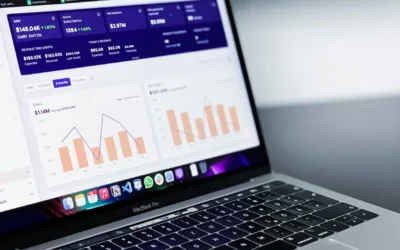

Why more businesses are moving to cloud accounting
For many business owners, accounting systems are something you set up once and don’t think about again.
But over time, this approach can create blind spots.
The shift to cloud accounting has changed how businesses manage their finances – and it’s making a real difference to visibility, efficiency, and compliance. Rather than being something you review after the fact, your financial data becomes something you can rely on day-to-day to make better decisions.
What is cloud accounting?
Cloud accounting platforms like Xero allow you to access your financial data online, in real time.
This means:
- No manual file transfers
- No waiting for reports
- No outdated information
Instead of working off last month’s numbers, you’re working with data that reflects what’s happening in your business right now.
For business owners, this removes a lot of the friction that traditionally came with managing finances and makes it much easier to stay informed.
Real-time financial visibility
One of the biggest benefits is visibility.
With cloud systems, you can:
- See your cash position instantly
- Track income and expenses in real time
- Monitor performance regularly
This makes decision-making much easier.
Rather than guessing or relying on your bank balance alone, you can clearly understand how your business is performing and where things are heading. Whether it’s hiring, investing or managing costs, better visibility leads to more confident decisions.
Better compliance and fewer errors
Cloud platforms help automate:
- BAS preparation
- Payroll and super calculations
- Bank reconciliations
This reduces:
- Manual errors
- Missed deadlines
Instead of relying on spreadsheets or manual processes, much of the heavy lifting is handled by the system. This doesn’t just save time – it also reduces the risk of costly mistakes and helps ensure your obligations are met on time.
Saves time and simplifies processes
Tasks that used to take hours can now be automated.
This includes:
- Invoicing
- Expense tracking
- Reporting
According to Xero, automation helps reduce admin time and improve accuracy.
Integration with other systems
One of the biggest advantages of cloud accounting is how easily it connects with other business tools.
Platforms like Xero integrate with systems such as:
- Hubdoc or Dext for automated receipt and bill capture
- Project management and job tracking tools
- Inventory and point-of-sale systems
- Payment platforms and bank feeds
This means information flows automatically between systems, rather than being entered multiple times.
For example:
- Supplier invoices can be captured, coded, and pushed into your accounting system without manual entry
- Receipts can be uploaded and matched to transactions instantly
- Job or project data can link directly to financial reporting, giving you better visibility over profitability
The result is:
- Less admin and data entry
- Fewer errors and duplication
- More accurate and consistent records
Over time, these integrations create a more streamlined and efficient workflow across the entire business—not just within your accounting function.
Supports better advisory
Cloud systems don’t just improve efficiency – they enable better advice.
With accurate, real-time data, we can:
- Provide more relevant insights
- Identify issues earlier
- Support better decision-making
Instead of reviewing historical information once a year, conversations can be based on what’s happening now and what’s coming next. This shifts the focus from compliance to strategy.
Final Thought
Cloud accounting isn’t just about technology — it’s about having clearer visibility and better control over your business.
For growing businesses, that clarity makes a significant difference.
How we can help
Strong bookkeeping is essential for maintaining healthy cash flow, accurate financial reporting and smooth day-to-day business operations.
Confidently plan for future growth and get support being with set up with Business Plus Numbers.
Book a 15-minute discovery call >
Sources