
Most business owners think about tax at one point in the year – usually when June is approaching or when their accountant asks for information.
By then, the reality is simple: most of the decisions that impact your tax position have already been made.
Tax isn’t something you fix at year-end. It’s the result of how you run your business throughout the year.
Tax is an outcome, not a strategy
One of the biggest misconceptions in business is treating tax as something to “minimise” at the last minute.
Good tax outcomes don’t come from rushed purchases or last-minute decisions. They come from:
- Understanding your numbers
- Making intentional decisions throughout the year
- Aligning tax with your broader business goals
The focus shouldn’t be: “how do I reduce tax right now?”
It should be: “what decisions am I making that will shape my tax position over time?”
Clear signs that you might need tax planning:
- You’ve had a surprise tax bill before—or you’re worried you might get one this year
- You don’t have clear visibility over your profit or tax position during the year
- You only think about tax when June approaches or when your accountant asks
- You’re not consistently setting aside funds for tax as income is earned
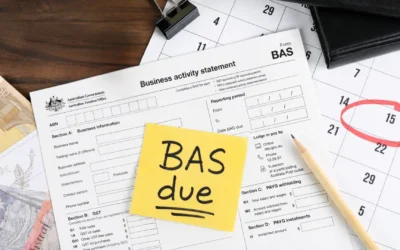
- You feel pressure on cash flow when BAS or tax payments fall due
- You’ve made last-minute purchases just to try and reduce tax
- You’re unsure how much tax you should actually be expecting to pay
- Your decisions aren’t based on up-to-date financial information
- You rely on year-end conversations rather than ongoing advice
- You’re not confident your current structure is still the right fit
Practical tax planning: what actually makes a difference
1. Be aware of timing
The timing of income and expenses does impact your tax position.
Done well, it can help:
- Smooth profit between financial years
- Manage cash flow
- Avoid spikes in tax
But timing should support your business decisions – not drive them.
2. Bring forward expenses – where it makes sense
Bringing forward expenses can be effective, but only when the spend is already part of your plan.
Examples where this works well:
- Upgrading equipment the business needs
- Investing in systems or software improvements
- Completing repairs or maintenance
- Making additional super contributions
- Pre-paying regular business expenses
If these costs are likely to happen in July anyway, bringing them forward into June can be a practical way to manage your tax position.
The key is this: you’re not spending to save tax – you’re being intentional about timing.
3. Avoid “spending for tax”
Where things go wrong is when decisions are made purely to reduce tax.
- Spending $1 to save 25–30 cents still leaves you behind
- Rushed purchases often don’t deliver real value
- Unnecessary spending creates cash flow pressure
Tax should never be the sole reason for a decision.
4. Plan for the tax – don’t get caught out
Tax planning isn’t just about reducing tax but also being prepared to pay it.
One of the most common issues we see is:
- Business owners not setting aside funds during the year
- Limited visibility over their actual profit position
- Unexpected tax bills creating pressure on cash flow
A better approach is to:
- Regularly estimate your tax position
- Set aside funds progressively
- Build tax into your cash flow planning
This turns tax from a surprise into something controlled and expected.
If you’re not currently doing this (or not sure how to), it’s something we can help you implement.
5. Keep the focus on the bigger picture
The goal isn’t just to reduce tax this year.
It’s to:
- Make better business decisions
- Maintain strong cash flow
- Support long-term growth
When you approach tax this way, the outcomes take care of themselves.
Your business structure should evolve with you
As your business grows, your structure becomes more important.
It impacts:
- How profits are taxed
- How profits are distributed
- How risk is managed
What worked when you started may not be appropriate now.
Strong tax planning includes stepping back and asking: “is the way this business is structured still serving us?”
Good record keeping isn’t just compliance – it’s control
Understanding what you can claim is important – but it’s only part of the picture.
More importantly:
- Your records should support your decisions
- Your numbers should reflect what’s actually happening in the business
Without this, business owners tend to:
- Miss legitimate deductions
- Or take positions that create unnecessary risk
Both are avoidable with the right systems and guidance.
Final thought
If you’re only thinking about tax once a year, you’re not really planning, you’re reacting.
A better approach is to treat tax as part of how you run your business, not something separate from it.
How we can help
This is where ongoing advisory makes a real difference.
With proactive tax compliance and financial support and practical advice, we help simplify the compliance process so you can focus on running and growing your business.
Rather than just reviewing things at year-end, we work with clients throughout the year to:
- Monitor performance and tax position
- Plan ahead for upcoming decisions
- Implement strategies that actually make sense commercially
- Ensure tax is provisioned for and managed proactively
If you’re not currently taking a strategic approach, or you’re unsure where to start, our team is here to help.